
EPD FOR HEALTHCARE
EPD Software
EHR (Electronic Patient Record) software determines how smoothly healthcare organizations operate. Not just in record keeping, but in collaboration, insight, and continuity. When processes are well-aligned, peace of mind arises. When systems are strained, you immediately feel the impact.
HCI develops practice management software for healthcare, focusing on security, scalability, and continuity. Designed for practices and organizations that want to maintain control over their processes and create room for development.
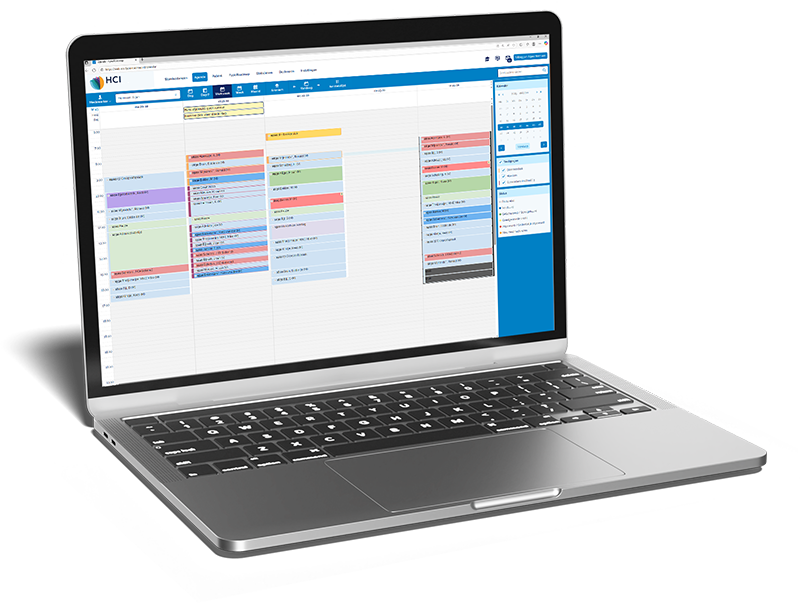
What EPD software supports
Good EHR software ensures:
Consistent record keeping
All healthcare professionals work according to the same structure and guidelines, ensuring that information is recorded clearly and that files remain complete and reliable.
Direct availability of information
Relevant client or patient data is always directly accessible to authorized users, without searching through separate systems or documents.
Overview of clients, trajectories and teams
At a glance, insight into ongoing trajectories, treatment statuses, and care providers involved, at both individual and team level.
A stable foundation for collaboration and accountability
Good documentation and access rights make collaboration between healthcare professionals transparent and support accountability towards clients, partners, and supervisors.
What is in an EHR?
An EHR consists of various functional components that support healthcare professionals in their daily work. In practice, the system also functions as EHR software for healthcare organizations that work with client files and care pathways (such as in mental healthcare or youth care). This ensures that both medical and care-related data are clearly recorded within a single environment.
Agenda and planning
Insight into appointments, treatment processes and availability, tailored to the practice or institution.
Reports and records
Easily record consultations and treatments, with clear reports for internal use.
Declarations and invoicing
Support in processing declarations and invoices, aligned with applicable laws and regulations.
Links with external systems
Integrations with other healthcare systems and services for efficient data exchange.
Use of AI and new technology
New technologies like AI offer many possibilities, including in healthcare. Their use can help healthcare providers, but it must be deployed wisely and safely.
Security and access management
Careful protection of patient data with roles, authorizations and logging.
Safety that works in practice
Healthcare organizations handle sensitive data. Therefore, EHR software must be demonstrably secure and comply with applicable laws and regulations.
Within HCI, information security is structured, with attention to processes, technology, and responsibilities:
GDPR guidelines
Supports careful processing, access management, and transparency surrounding personal data.
NEN 7510
Focuses specifically on information security in healthcare, with a focus on processes, roles and risk management.
ISO security standards
Ensure a structural and continuously improving approach to information security.
Want to know more about how this is set up within HCI?
Read more on the page Information security.
EPD software per healthcare discipline
While the foundation of EHR software is the same, the design can vary by discipline or professional group. Reporting, workflows, and collaboration require nuanced approaches for each healthcare context.
Health Cloud Initiative (HCI) supports EHR software for:
These pages delve deeper into how EHR software is applied within each discipline.
Physiotherapy
Focused on overview of treatment processes, reporting, declarations and collaboration within the practice.
Speech therapist
Designed for careful record keeping and clear progress registration.
Occupational Therapy
Supports complex and long-term processes with a focus on structure and insight.
Dietetics
Supports accurate nutritional record keeping, consultation registration, and customized treatment plans.
Exercise therapy
Designed to provide insight into posture, movement and daily resilience with clear registration and progress.
Mental Health Care
Suitable for organizations and practices with complex care needs and sensitive data.
Youth Services
Designed for secure collaboration and careful handling of youth client data.
Multidisciplinary care
For organizations where multiple disciplines and professional groups collaborate within a single file or system.
One platform, coherent processes
When record keeping, planning, and reporting operate independently, unnecessary complexity arises. Within HCI, EHR software forms the core of a single, cohesive platform.
This means:
Fewer switching moments
Less transfer
Less duplication of work
More overview
The system supports how care is organised, not how software is constructed.
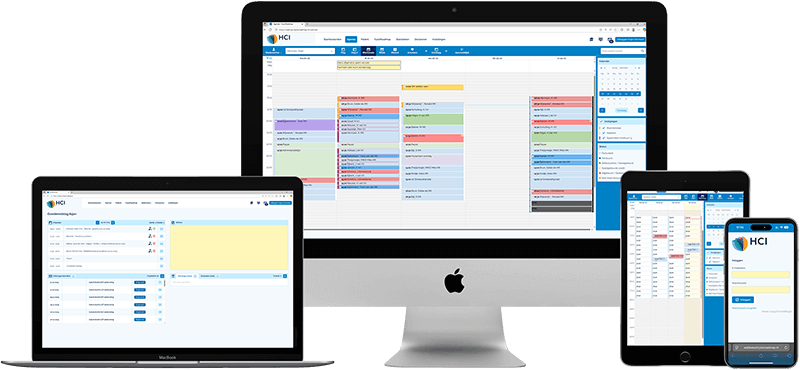
Frequently asked questions about EHR software
An EHR consists of various functional components that support healthcare professionals in their daily work. In practice, the system also functions as EHR software for healthcare organizations that work with client files and care pathways (such as in mental healthcare or youth care). This ensures that both medical and care-related data are clearly recorded within a single environment.
What distinguishes HCI from other EHR solutions?
Many EHR solutions have separate modules for file management, planning, and reporting that are linked together. This works, but in practice, it often creates extra steps, inconsistencies, and duplicate work.
HCI is structured differently. Records, planning, and reporting form a single, cohesive platform, built on the care processes themselves. Information is captured once and is immediately available where needed, without transfers between modules or systems.
In practice this means:
fewer manual steps
one central source
consistent information about clients, trajectories and teams
better support for collaboration between disciplines
scalability without re-implementation
Security and access management
Careful protection of patient data with roles, authorizations and logging.
The result is an EHR that moves with the organization.
Is the software suitable for multiple healthcare disciplines?
Absolutely. The foundation of an EHR is generic, and its design is tailored to each discipline. Within HCI, we offer HCI CRS, which is specifically designed for mental healthcare and youth care. We also offer the future-oriented HCI One for all paramedical practices and institutions (such as physiotherapists, speech therapists, occupational therapists, multidisciplinary practices, and more).
How is implementation and transition handled?
The transition to HCI will be implemented in phases, with support during setup, data migration, and implementation. This process will take existing work processes, team structures, and continuity of care into account. Step-by-step implementation and support will ensure that care processes continue to run smoothly and that teams are involved in the change.
Want to know more about EHR software for your discipline or professional group?
How do I compare EHR software?
Choosing (or switching to) a new EHR is a crucial decision that begins with a needs analysis, followed by selecting a suitable system and detailed planning, including data migration and staff training. Vendors offer a variety of products, so it's important to carefully consider the right software for your practice or institution. More information about comparing EHR providers can be found here.